
3 New Papers: Spread Your Protein Across Meals, HIIT Intensity Matters for Visceral Fat, and Brain Stimulation Beats Insomnia
Three PubMed papers indexed May 29–June 5, 2026: a 16-week RCT (n=44 women) finds even protein distribution across meals cuts snack food cravings and intake vs. dinner-heavy protein; an 8-week RCT (n=40 sedentary men) shows high-intensity interval training beats moderate intensity for visceral fat and LDL; and a 19-RCT meta-analysis (n=1,690) confirms low-frequency rTMS significantly improves sleep quality, including PSG-measured sleep efficiency.

리서치 브리프
Three PubMed papers indexed May 29–June 5, 2026: a 16-week parallel RCT shows women who spread protein evenly across three meals crave and eat significantly less junk food than women who load protein at dinner; an 8-week RCT in sedentary young men finds high-intensity interval training outperforms moderate-intensity for visceral fat and LDL reduction; and a meta-analysis of 19 RCTs shows low-frequency repetitive transcranial magnetic stimulation reliably improves sleep quality, including polysomnography-measured sleep efficiency.
Nutrition: the time of day you eat protein changes how much junk you eat later
The finding in short: Eat roughly equal amounts of protein at breakfast, lunch, and dinner — instead of saving most of it for dinner — and you'll crave and consume significantly less energy-dense snack food during a weight-loss diet.
Researchers at the USDA Grand Forks Human Nutrition Research Center randomized 44 women (BMI 28–45, ages 20–44) to one of two patterns for 16 weeks: an even distribution of ~30 g protein per meal vs. a skewed distribution that front-loaded most protein at dinner (15 g at lunch, heavy at dinner). The first 8 weeks used provided foods under 20% energy restriction; weeks 9–16 were self-managed.1
At weeks 8 and 16, participants completed a computerized "reinforcing value" task — essentially, how hard are they willing to work for a snack versus a preferred non-food activity? The even-protein group had a significantly lower reinforcing value score (0.44 vs. 0.55, p=0.048). They also physically ate less of the available snacks during the test session: 44 g vs. 62 g (p=0.02).1
The mechanism is likely satiety signaling: more protein earlier in the day sustains satiety through mid-afternoon, when most snacking occurs, reducing the behavioral pull toward high-calorie foods by the time the snack is available.
Study design: 16-week randomized parallel RCT. n: 44 completers (from a larger recruitment pool; study was paused March 2020–May 2022 during COVID-19). Peer-review status: published in a peer-reviewed Elsevier journal, 2026. Conflicts of interest: not disclosed in the abstract.
Actionable takeaway: If you eat most of your protein at dinner and find yourself snacking heavily in the afternoon or evening, try redistributing: aim for roughly 25–35 g at breakfast and lunch, with a similar or smaller amount at dinner. This single timing change reduced snack intake by ~30% in this trial without changing total protein or calorie targets.
Exercise: for sedentary adults, intensity — not just volume — drives the bigger visceral fat win
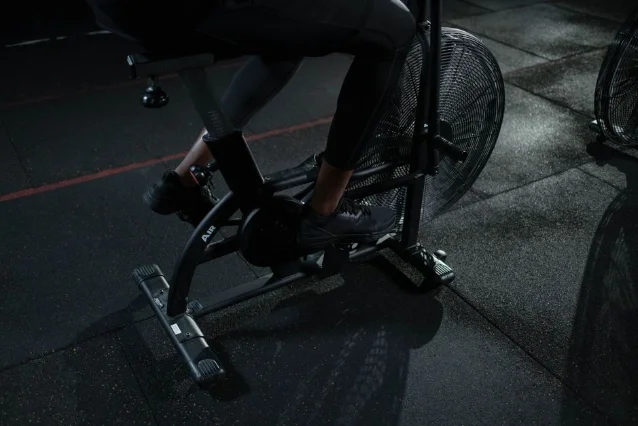
High-intensity interval training (HIIT) does more than moderate-intensity interval training (MIIT) for visceral fat and lipid markers, even when total session structure is matched, a new RCT confirms.
Forty sedentary young men were randomized 1:1:1:1 to 8 weeks of four interval-training protocols: moderate-intensity short intervals (MISI), moderate-intensity long intervals (MILI), high-intensity short intervals (HISI), or high-intensity long intervals (HILI), 3 sessions/week.2
All four protocols significantly cut percent body fat, visceral fat area (VFA), total cholesterol, and triglycerides, while raising HDL and skeletal muscle mass. But high-intensity protocols pulled ahead on the harder-to-shift markers:
- VFA: HISI produced significantly lower visceral fat area post-intervention than MILI
- Triglycerides: HISI dropped TG significantly more than MISI
- LDL: Only the two high-intensity groups (HISI and HILI) showed statistically significant LDL reductions
- HDL: Both HISI and HILI achieved higher HDL than MILI post-intervention
Basal metabolic rate rose in MILI, HISI, and HILI but not in MISI, suggesting that very short moderate-intensity bursts may not be sufficient to drive the metabolic shift.2
Study design: 4-arm parallel RCT, assessor-blinded. n: 40 (no dropouts). Limitations: small sample, no non-exercise control arm, sedentary young men only — results may not generalize to women, older adults, or already-active individuals. Conflicts of interest: not reported.
Actionable takeaway: If your current interval workout is moderate-paced and you're trying to reduce visceral fat or improve your lipid panel, the data support bumping intensity over simply adding more time. Even 8 weeks at high intensity moved LDL and visceral fat in ways moderate training did not.
Sleep: a non-drug brain stimulation technique clears the biggest insomnia trial bar yet
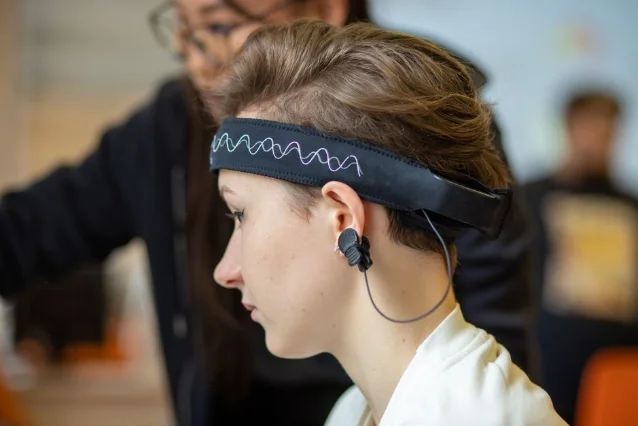
A meta-analysis pooling 19 randomized controlled trials and 1,690 adults with primary insomnia disorder finds that repetitive transcranial magnetic stimulation (rTMS) — a non-invasive technique that delivers pulsed magnetic fields to specific brain regions — significantly outperforms sham stimulation across multiple sleep outcomes.3
Key effect-size findings versus sham rTMS:
- PSQI total score (Pittsburgh Sleep Quality Index): significant improvement, p < 0.001
- ISI score (Insomnia Severity Index): significant improvement, p < 0.001
- Polysomnography-measured sleep efficiency: significant improvement, p = 0.003 — this is the most objective marker in the analysis, measured in a sleep lab rather than by self-report
When compared to medication alone, rTMS combined with medication outperformed medication-only on PSQI (p = 0.003), supporting its use as an adjunct.3
The review specifically identifies low-frequency rTMS (typically 1 Hz, applied to the right dorsolateral prefrontal cortex) as having the clearest efficacy and safety profile for primary insomnia. Subgroup analyses suggest that disease duration, treatment length, and the brain region targeted all moderate the effect — meaning not all rTMS protocols are equal.
Study design: systematic review and meta-analysis of 19 RCTs. n: 1,690 adults. Peer-review status: published in Frontiers in Neuroscience, peer-reviewed. Conflicts of interest: not reported.
Actionable takeaway: rTMS is not yet a first-line clinical recommendation (CBT-I remains gold standard), but this meta-analysis — the most comprehensive to date, with polysomnography confirmation — moves it clearly into the "evidence-based adjunct" category. If you or a patient have chronic insomnia that hasn't responded to behavioral interventions or medication, rTMS via a qualified provider is now backed by strong-enough evidence to ask about.
Papers indexed May 29–June 5, 2026. All three are human studies. Animal studies were excluded.
이 콘텐츠를 둘러싼 관점이나 맥락을 계속 보강해 보세요.