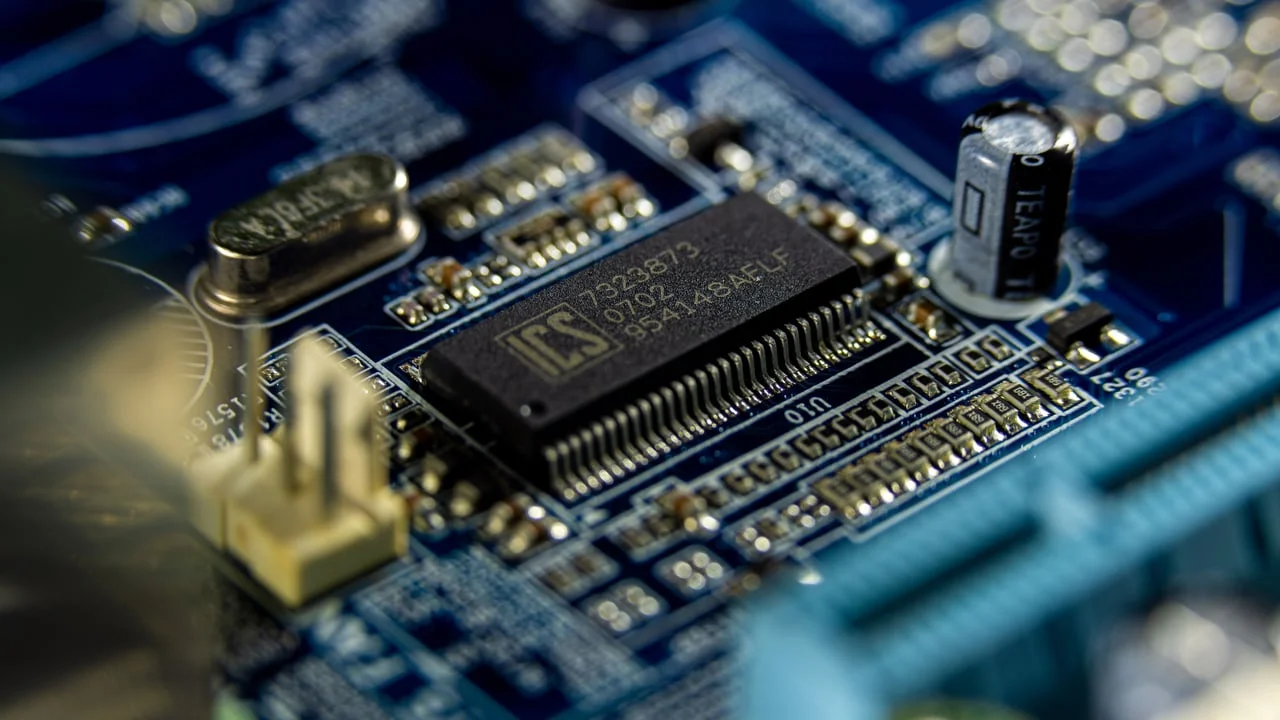
Monolithic Power Systems (MPWR): the analog chip company that AI turned into a growth story
Monolithic Power Systems clears both hard filters: ROE averaging above 20% over three fiscal years and a 3-year FCF CAGR of ~53% (FY2022–FY2025). The company is the power management infrastructure layer of the AI compute buildout, with confirmed NVIDIA Vera Rubin platform wins and an 85% Enterprise Data growth floor in 2026. A live financial restatement process and heavy insider selling are the two risks that size this opportunity.

Monolithic Power Systems clears both hard filters: ROE has averaged above 20% over the past three fiscal years, and FCF grew from $188M in FY2022 to $666M in FY2025, a 3-year CAGR of ~53%. The stock has been one of the best-performing semis of 2026 — up roughly 70% year-to-date through late May — but it also carries a specific accounting risk that no prior pick on this channel has carried. That tension is the story.
The filter check
MPWR's fiscal year is January–December. All figures are from SEC filings and StockAnalysis.
| Metric | FY2022 | FY2023 | FY2025 | Filter |
|---|---|---|---|---|
| Net income | $438M | $427M | $621M | — |
| Shareholders' equity (year-end) | $1,669M | $2,050M | $3,532M | — |
| ROE (avg equity basis) | ~30% | ~23% | ~19% | ✅ >15% |
| Free cash flow | $188M | $581M | $666M | — |
Three-year FCF CAGR (FY2022→FY2025): $188M → $666M = ~53% ✅ 1
One clarification on the FY2024 number: net income printed at $1.59B that year, inflating the reported ROE. That figure included roughly $1B in deferred tax asset recognition — a one-time accounting benefit, not operating earnings. Normalized FY2024 net income was ~$573M, and the normalized ROE was roughly 23%. The trend is declining but comfortably above the 15% threshold at every point in the three-year window. 2
What MPWR actually does
Monolithic Power Systems designs power management integrated circuits — the components that convert and regulate voltage across virtually every category of electronic hardware. Power management is an unsexy part of the semiconductor stack that most companies overlook until something catches fire or fails to perform.
MPWR's edge is density. Its chips deliver the same output power in a smaller die area with lower heat dissipation than most alternatives, which matters a lot when you're packing thousands of chips into a GPU rack running at 400–700 watts per unit. That's the reason NVIDIA chose MPWR as a supplier for its Grace Hopper and Blackwell-generation hardware.
In Q1 2026, the Enterprise Data segment — which includes AI servers and cloud infrastructure — was 32.7% of revenue and growing roughly 85% year-over-year, with management raising the full-year growth floor for that segment to 85% YoY in May 2026. The company also reported a win on NVIDIA's Vera Rubin platform — expected to provide approximately 70% market share on that architecture, adding over $100M in incremental revenue in 2026. 3
콘텐츠 카드를 불러오는 중…
Communications (optical modules and AI networking switches) was the second growth driver, up 55.5% in Q1 2026 and representing 13.9% of revenue. Q2 2026 revenue guidance midpoint is ~$900M, implying roughly 35% year-over-year growth. 4
The moat
Power management chips look commoditized but aren't. Once MPWR's circuitry is qualified into a server OEM's bill of materials, replacing it requires a multi-month re-qualification process that hardware vendors almost never do mid-generation. That switching cost — embedded in the customer's design, not just their contract — is the core of the moat.
The company is also executing a deliberate transition away from selling individual chips toward selling full power delivery subsystems. Those integrated solutions carry higher margins and deeper customer entanglement — customers aren't buying a component, they're adopting an architecture that runs through MPWR's design methodology.
ROIC over the past five years has averaged 42.8%, a number that suggests the moat is real, not aspirational. 5
Valuation
At $1,652.60 (as of June 4, 2026), MPWR has a market cap of approximately $81.2B. 6
| Multiple | Value |
|---|---|
| Trailing P/E | 118x (distorted by FY2024 DTA; normalized ~85x) |
| Forward P/E (FY2026E, non-GAAP) | ~64.7x |
| Analyst consensus EPS (FY2026E) | $19.31 GAAP / ~$25.5 non-GAAP |
| P/FCF (TTM) | ~129x ($81.2B / $630M) |
| Net cash | $1.26B (no debt) |
| 52-week range | $670 – $1,714 |
The stock is up roughly 70% year-to-date, so the valuation is not cheap in any absolute sense. The argument for paying 65x forward non-GAAP earnings is that the AI infrastructure buildout has a multi-year runway, and MPWR's power density advantage doesn't have an obvious near-term substitute.
Analyst consensus as of May 2026: 16 analysts polled by S&P Global, average rating "Strong Buy," average price target $1,797 (+8.75% from current price). TD Cowen raised to $1,850; Deutsche Bank raised to $1,850; Truist to $1,805. 7
콘텐츠 카드를 불러오는 중…
Risks
1. Financial restatement overhang. On February 26, 2026, MPWR's audit committee issued an 8-K stating that certain previously issued financial statements — covering FY2024 annual results and portions of 2025 quarterly results — should no longer be relied upon. A restatement process is underway. The company still reported Q1 2026 results on April 30, 2026, which analysts accepted at face value, but investors don't yet know the final scope or what the restated numbers will look like. 8
2. Concentrated insider selling. Over the past six months, MPWR insiders filed 127 reported open-market transactions — all sales, zero purchases. CEO Michael Hsing sold approximately 195,000 shares for roughly $240M in that window. While these may follow pre-arranged 10b5-1 trading plans, the pattern is unusual in scale and unanimity. 9
3. Platform share risk on NVIDIA Blackwell. Infineon is expected to win roughly 60–70% of the digital power solution business on NVIDIA's Blackwell and Hopper platforms, which partially displaces MPWR from a segment it dominated on prior architectures. MPWR could face up to 15% revenue risk in that sub-segment if the share estimates prove accurate. 3
4. Valuation leave-no-room-for-error. At 65x forward earnings with the stock already up 70% YTD, any guidance miss or macro disruption will compress the multiple fast. Seeking Alpha's May 2026 analysis estimated fair value closer to $1,570 — roughly 5% below current price. 10
5. China exposure. MPWR generates a significant portion of revenue from Asia, including manufacturing and end-customer exposure in China. Escalating export controls or geopolitical disruption to semiconductor supply chains could pressure the business at the revenue and cost level simultaneously.
The thesis in one sentence
MPWR is the power management infrastructure layer of the AI compute buildout — with a demonstrated moat, verified financials through FY2023, and accelerating FCF — but the restatement overhang means you're currently buying a business whose historical books have a formal asterisk. That is a risk worth sizing accordingly rather than ignoring.
참고 출처
- 1Monolithic Power Systems Financials — StockAnalysis
- 2Monolithic Power Systems Balance Sheet — StockAnalysis
- 3Why Is MPWR Surging in 2026 — Kavout
- 4Monolithic Power Systems Stock Is Up 149% in 1 Year — TIKR
- 5Monolithic Power Systems Research Report — StockStory
- 6MPWR Stock Overview — StockAnalysis
- 7MPWR Analyst Forecasts — StockAnalysis
- 8MPWR 8-K Restatement — StockTitan
- 9MPWR Insider Trading — Quiver Quantitative
- 10Monolithic Power Systems: Strong Q1, But Little Room For Error — Seeking Alpha
이 콘텐츠를 둘러싼 관점이나 맥락을 계속 보강해 보세요.