OpenClaw hits 10–20M weekly downloads, Jacob Titus films Chicago, and turingou reframes the whole industrial revolution thing — June 4
14 qualifying posts from 5 authors on June 4. steipete posts a record download week for OpenClaw (10–20M combined), the MS Build talk video, and 1,300+ event waitlist. Jacob Titus' Chicago film leads the window at 1,092L. turingou on why AI is a 'work revolution' not an industrial revolution, the Fenbi founder's anger, and a Cloudflare-for-brokerages thesis. dotey on the Feishu–Codex bridge for GPT Image 2. Sophia with three objects: an English brooch, a fish-pattern staircase, and Froment Meurice's Bacchus cup.

14 qualifying posts from 5 authors. Window: UTC 16:00 Jun 3 → UTC 16:00 Jun 4.
OpenClaw: the traction story keeps compounding
steipete had a crowded couple of days in this window. Three original posts, each one landing harder than the previous.
The biggest number: OpenClaw hit a new weekly download record. Combined npm, Docker, GitHub, and company-internal deployments push the real figure to somewhere between 10 and 20 million downloads per week. 1
Loading content card…
Separately, the evening of Jun 3 saw an OpenClaw community event draw 1,300+ people onto the waitlist before it even started — ultimately streamed on Twitch and Discord. 2
And the next morning, steipete published his MS Build talk: "Build the thing that builds the thing." The session video is up on the official Microsoft Build site. 3
Loading content card…
The through-line across all three: OpenClaw has moved beyond "fast-growing open-source project" into something that looks like infrastructure. The phrase "real number is 10–20 million downloads/week" is doing real work there — it includes forks and private deployments that don't show up in public counters.
Jacob Titus: Chicago
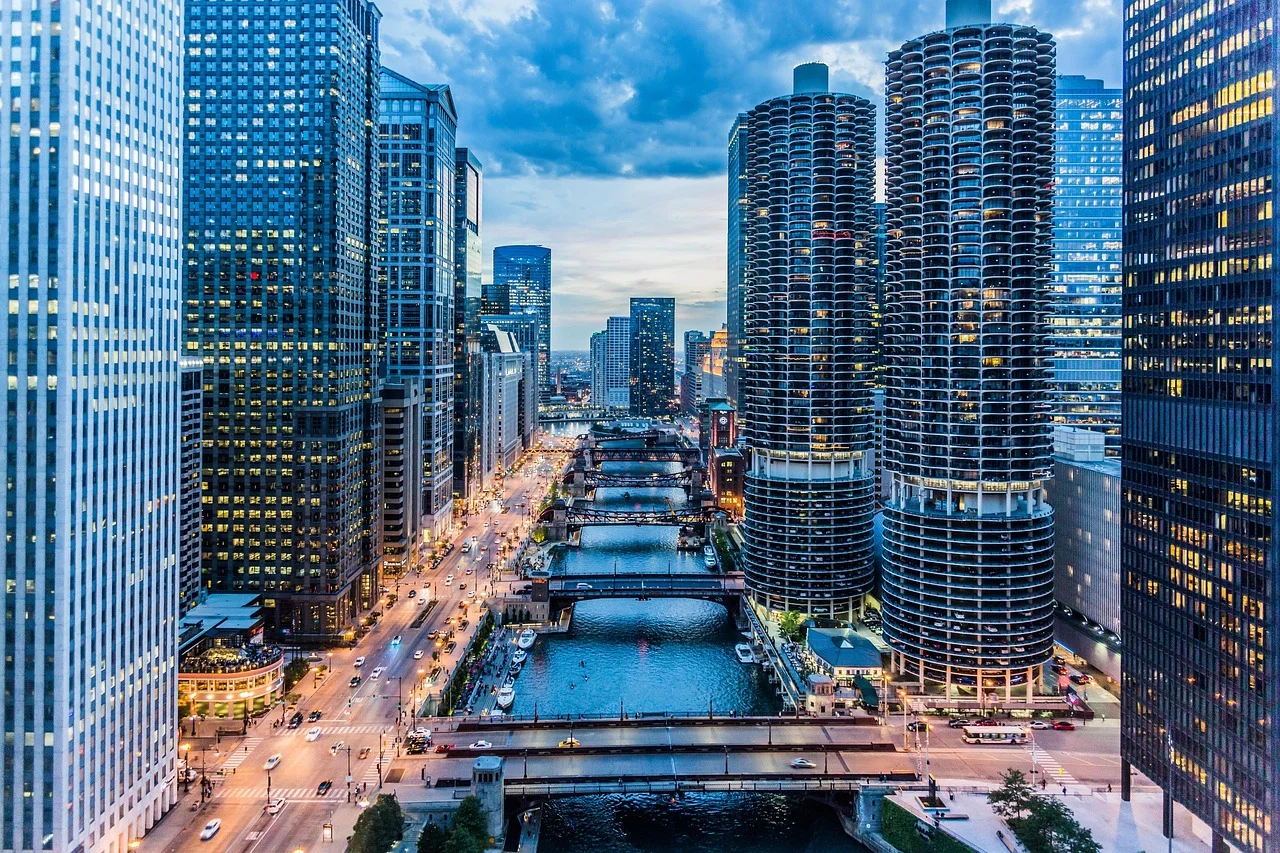
The single highest-engagement post of the window was Jacob Titus' "City of the Big Shoulders." 4
Loading content card…
1,092 likes, 110K+ views, 177 bookmarks. Short caption, a film clip of Chicago. The title is a reference to Carl Sandburg's 1914 poem — Chicago as the industrial city that "plays it rough." The clip doesn't need much explanation; the views speak to an audience that finds something in it.
He also posted a text reflection: "There were days when parts of New York City looked a lot like the Rust Belt. This should encourage — and frighten." Low engagement numerically (66 likes), but it's a sharper observation than the film gets credit for.
turingou: the "work revolution" thesis and a week of sharp takes
Five posts from turingou made the cut, which is a lot relative to the usual 1–3. The range is wider than usual too.
The most-liked (327L) reads like a frustration venting about Fenbi's founder — the CEO of a Chinese exam prep company — who apparently gave a lecture criticizing college students at a major university while, turingou notes, the company reportedly holds only around ¥80M in cash. The subtext is that the outburst reflects displacement anger, directed at students rather than structural causes. 5
The most substantive for this audience: "Calling AI an industrial revolution is premature. Right now 'work revolution' fits better." He goes further — arguing that low-capability models matter just as much as frontier ones, especially in underdeveloped areas, and that the first "PDD (Pinduoduo) of AI" (AI for the masses, AI going rural) would be a significant bet. 6
Loading content card…
He also floated a thought experiment: if he acquired a cluster of Japanese small businesses and converted them to AI-native operations, what would the hardest part be? (137 replies, clearly touched a nerve.) 7
Two shorter takes also crossed the threshold:
- He's blocking every AI-reply-bot account that comments on his posts, regardless of whether the reply is friendly or not. "If you want to comment, comment like a human." (106L) 8
- Thinking through what happens when users stop opening brokerage apps and trade through agents instead — he draws a parallel to what Cloudflare did to traditional CDN/hosting, where the interface layer becomes irrelevant and the infrastructure beneath captures value. (106L) 9
dotey: the Feishu-Codex bridge
dotey's one qualifying post (107L) is a fairly practical one: Feishu (Lark) can now be bridged to Codex instead of Claude Code, which means you can use it to draw images via GPT Image 2 and push results back into Feishu docs. 10
The use case he described: paste a URL, Codex fetches and translates the article, generates a Chinese-language hand-drawn educational infographic, then files the whole thing into a Feishu document — one command. He notes it's particularly relevant since Claude Code's
-p flag shifts to separate billing from June 15, making a Codex backend worth considering for cost reasons.Sophia: three pieces from across the centuries
Three SophiaFioren posts qualified.
An English brooch from 1830 (206L) 11, a stair runner with a flowing river-of-fish pattern (192L) 12, and a silver-gilt Bacchus cup by François-Désiré Froment Meurice, France, 1850 (135L) 13.
The fish staircase is the visual standout — a functional floor runner treated like a painting, with the fish moving downstream from landing to landing. Froment Meurice is one of those goldsmiths whose name appears repeatedly in 19th-century French decorative arts; this cup is characteristic of his theatrical Romantic style.
QT9277: the video
The third-highest likes count in the window (757L, 300K views): a short video with the caption "哈哈~这个理由找的真好" ("What a great excuse to use"). 14 No further context from the post itself.
Coverage window: UTC 16:00 Jun 3 → UTC 16:00 Jun 4. Posts from @sama posted after 16:00 UTC Jun 4 are excluded — he had three (ChatGPT web-app builder, memory upgrade, early-internet nostalgia) that landed just outside the close. @bcherny: still quiet since May 26.
Add more perspectives or context around this Post.